




What Is a Natural Diamond?
A natural diamond is carbon that crystallised deep in the Earth’s mantle under intense heat and pressure. Most natural diamonds are between one and three and a half billion years old. Volcanic eruptions carried them closer to the surface, where they are mined, cut and polished.
Part of their appeal is that story. Every natural diamond is a piece of geological history, and supply is limited, which is why they hold a premium.
What Is a Lab-Grown Diamond?
A lab-grown diamond is a real diamond created above ground. Manufacturers use one of two methods:
• HPHT (High Pressure, High Temperature): recreates the conditions deep underground to crystallise carbon.
• CVD (Chemical Vapour Deposition): builds the diamond layer by layer from carbon-rich gas.
The result is chemically, physically and optically the same as a mined diamond. It isn’t a simulant like cubic zirconia, and it isn’t moissanite, which is a different gemstone altogether.
Lab-Grown vs Natural: Key Differences

|
Factor |
Natural diamond |
Lab-grown diamond |
|
Composition |
Pure carbon crystal |
Pure carbon crystal |
|
Hardness |
10 on the Mohs scale |
10 on the Mohs scale |
|
Origin |
Formed underground over billions of years |
Grown in weeks in a lab |
|
Appearance |
Graded on the 4Cs |
Graded on the same 4Cs |
|
Price |
Higher |
Usually much lower for similar size and grade |
|
Resale value |
Generally stronger |
Generally weaker |
|
Certification |
Available |
Available; reports state “laboratory-grown” |
Appearance
A well-cut lab-grown diamond and a well-cut natural diamond look identical. Differences in sparkle come from cut quality, not origin. That’s why understanding the diamond 4Cs matters more than the natural-versus-lab label when it comes to how a stone looks.
Origin
This is the one real difference. Some buyers value the rarity and age of a natural stone. Others prefer lab-grown because it avoids mining altogether. Neither view is wrong; it’s a personal call.
Price
Lab-grown diamonds usually cost significantly less than natural diamonds of the same size and quality. In practice, that means you can choose a larger stone, a better grade, or a higher gold karat for the same spend.
The flip side is resale: natural diamonds have a more established secondary market. At Aspiri, lifetime exchange values the diamond at 100% of its prevailing value for natural and 90% for lab-grown.
Which Factors Should You Consider?
Ask yourself these four questions before you choose:
-
What’s your budget?
- If you want the most visible diamond for your money, lab-grown usually wins. Our guide to diamond jewellery by budget helps you set a realistic range.
- How much does origin matter to you?
- If a billion-year-old stone means something to you, or to the person you’re gifting, choose natural. - Are you thinking about resale?
- Natural diamonds generally hold value better. - How often will you wear it?
- For everyday pieces like studs and slim rings, lab-grown makes it easier to afford good quality without worrying about daily wear.
Whichever you pick, ask for a certificate. It should record the diamond’s grades and clearly state whether it is natural or lab-grown. Our diamond certification guide explains what to look for.
Lab-Grown and Natural Diamonds at Aspiri
You don’t have to pick a side before you pick a design. Many Aspiri pieces, like the Classic Solitaire Stud Nose Pin, offer lab-grown diamonds (EF colour, VVS–VS clarity) and natural diamonds in three grades (IJ-SI, GH-VS and EF-VVS), so you can compare both on the same piece. A few designs to explore:
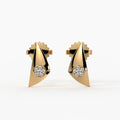
• Lunessa Cushion Diamond Solitaire Stud Earrings: a single cushion stone for daily wear.
• Heart Cluster Solitaire Ladies Ring: a heart-shaped centre that works as a gift.
• Amielle Heart Diamond Drop Pendant: a delicate drop with a diamond-accented bail.
Explore more in our diamond rings and diamond earrings collections.
Frequently Asked Questions
Are lab-grown diamonds real diamonds?
- Yes. They have the same chemical, physical and optical properties as natural diamonds.
Can a jeweller tell a lab-grown diamond from a natural one?
- Not by eye. It takes specialised testing equipment, which is why a grading report matters.
Do lab-grown diamonds last as long as natural diamonds?
- Yes. Both score 10 on the Mohs hardness scale and are equally durable.
Is a lab-grown diamond the same as moissanite?
- No. Moissanite is a different gemstone. Lab-grown diamonds are actual diamonds.
Why are lab-grown diamonds cheaper?
- They can be produced in weeks rather than mined, so supply isn’t limited in the same way.
Which is better for everyday jewellery?
- Both work. Lab-grown often gives better size and grade for the same budget.
Related Guides
Choosing the stone is one step. Our guide to buying diamond jewellery covers metals, settings, jewellery types and care. You can also compare costs in our diamond jewellery price guide.